
- cross-posted to:
- technology@lemmy.ml
cross-posted from: https://feddit.org/post/29105698
cross-posted from: https://lemmy.ml/post/46526992
https://www.sciencedirect.com/science/article/abs/pii/S2095495622003485
This is a content farm/copy of a copy (rule c)1), but I won’t remove this due to the immense momentum this post has. Additionally, the linked ScienceDirect paper appears unrelated.
Instead, I’d recommend one of the following high-quality sources:
https://advanced.onlinelibrary.wiley.com/doi/10.1002/aenm.202506734 (paywalled but has abstract, and your local library may have access) —thanks SaveTheTuaHawk@lemmy.ca!

Ok so it’s a cheaper competitor to LiFePO. Low density but that’s fine for grid storage. Australia should be stoaked
It won’t scale and we’ll never hear about it again
Factorio batteries
Iron flow batteries are not in cells pictured in OP. They are in vats that fill a fuel cell to make power. Under 80% efficient, though OP claims to have broken through 75% efficiency barrier. 8 hour charge/discharge rate is good enough to be practical, but the balance of plant of fuel cell and pumps makes it not as cheap as pure iron could impress.
I’ve seen articles similar to this many, many times over many, many years, but we’re still using the same battery tech as ever. Breakthroughs are good and all, but don’t go ranting and raving too hard about this stuff unless it becomes viable and practical enough for either consumer or industrial applications, preferably both.
we’re not using all the same battery tech today. there’s sodium ion batteries which are widespread in china already today. the west is just lagging behind (again)
Well, they do make them over there.
Technology wise, we really have a lot of eggs in the ai basket.
Ehhhh battery tech has been advancing quite a bit lately as we (thankfully) move away from lithium-based batteries. Grid-scale installations use a variety of battery tech these days with constant improvements being made to them. Liquid metal batteries, salt batteries, flow batteries, etc there are a lot of new options being used and developed.
On the more consumer-focused end of things, LFP batteries have surged in popularity due to their lower cost, higher reliability, and longer life. NMC batteries are also sued in some EVs. We probably won’t see a replacement to lithium ion cells for consumer electronics for a while because their power density per size/weight is so good but R&D is still making progress with alternative technologies.
Liquid metal batteries, salt batteries, flow batteries, etc there are a lot of new options being used and developed.
Ambri is already broke.
Yeah, for gridscale power in areas without enormously expensive land prices, cheap might beat out dense in terms of battery tech usability. Lithium is still best for applications that require energy density (EVs) but for grid storage I can see bulky, cheap, resilient/reliable batteries make more sense as a long-term investment.
I can see bulky, cheap, resilient/reliable batteries make more sense as a long-term investment.
Pump water up a hill during sunlight.
Just requires a hill that is big enough, two basins that can hold the water, and then of cause we need all the water.
I’ve waiting for this
my body is ready!
Hmm, there’s no discussion of what the energy density is compared to lithium-based battery chemistries. In articles about new battery designs, that usually means it’s pretty bad. This will have limited value if you need 10x battery volume/mass for equivalent energy storage, primarily only for grid-scale systems, which the article specifically mentions near the end:
The development arrives as the international race to develop iron-based flow batteries accelerates, with the technology increasingly viewed as the most viable successor to lithium-ion for large-scale grid storage.
I’m guessing these batteries are heavy and bulky compared to an equivalent LiPo. Probably safer than the molten sodium grid storage systems, so that’s good.
On the other hand, while lithium may be trading at 80x the price of iron on the market, you’re going to need a lot more iron than you would lithium for each unit of equivalent energy storage, plus it’s going to take up more space (real estate). The eventual storage system will probably be somewhat cheaper than an equivalent lithium system, but won’t fit everywhere, especially developed urban areas due to larger space requirements, and definitely won’t be 80x cheaper, even if the iron/lithium price ratio remains the same. It won’t replace lithium batteries in mobile applications (vehicles, electronics, etc) or anywhere that physical space is at a premium.
The article is written to sound overly positive about this protoype, with a sensationalized headline, while not mentioning the drawbacks, and just hoping that the reader is to too ignorant to notice.
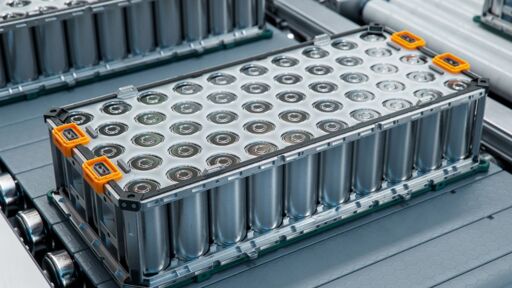
*Edit: Also, the picture attached to the article is bunk. Flow batteries require a pumping system to circulate the electrolyte fluid, which comes with a long-term.maintenance cost:
[…] all flow batteries include auxiliary components such as pumps and valves, which do require a regular maintenance cycle.
Every time I see a sensational headline like this, I wonder, what’s the catch?, because certainly I would have heard about it before it’s finalized.
Thanks for providing said catch.
there’s no discussion of what the energy density is compared to lithium-based battery chemistries
Energy density is not a universal concern for low cost batteries. Not every energy storage device is for a car or phone.
Sure, but as I already pointed out above, it’s very relevant for an article titled:
China develops iron battery 80 times cheaper than lithium that can last 16 years
This is a misrepresentation of the facts. While iron may be 80x cheaper than lithium, the iron battery built with this design will not be 80x cheaper than an equivalent lithium battery, because it will require substantially more material, as well as additional mechanical complexity (liquid pumping).
You’re responding as if I’m criticizing the technology. I’m not. I’m criticizing the sensationalist writing of this article that is intentionally manipulative of the reader.
Energy density isn’t really a problem for grid-wide storage. Just build huge electrolyte tanks under the solar panels, voilà, generation and storage.
If they’re really stable, they’ll probably be placed all over the place and be a huge help in managing demand.
It won’t fit all use cases, you’ll want batteries with better density for anything mobile, but there’s definitely also a huge use case for this type of battery.
electrolyte
That’s what plants crave!
The mw scale container lithium batteries could fit at most substations for a decentralized storage system without needing much if any new land. These kind of lower density batteries wouldn’t work as well for that. They’d need more land and couldn’t go in as many places.
Does it take more land than a solar array? What about a coal plant + its open pit mines, or a nuclear plant + its waste storage?
I have literally never heard of space even remotely being an issue for grid storage before, except in the context of pumped hydro sites. Why are people suddenly whining about how it can’t fit into a closet? Are they under the impression that this is how the grid works right now? Do they think there needs to be a gas peaker plant in every substation or else the grid collapses?
The way the grid works now with highly centralized large installations is a weakness in the system itself. A gas peaker plant takes up all that space because it needs it.
Solar arrays do take up a lot of space, and we can’t just put them anywhere.
Moving away from that into more decentralized systems will strengthen the grid overall, and that includes getting solar on our roofs as well, where we have this unused space (edit: and at places like our massive parking lots)
A big battery farm with batteries that take up a lot of space somewhere isn’t bad, but you aren’t just doing that anywhere, but you can likely drop down 4mwh container sized batteries right in the middle of cities at their substations just fine, and that will build resilience. (edit: And in this case, they already own the land, and they often have extra space)
With something like that, you could even cut yourself off from the bigger grid if something goes wrong and still provider power to those connected to the battery for a brief time.
Edit: And ya, I’m sure you could probably drop a smaller one of these in there as well, but if space is confined, you’d want to get the most out of it.
Edit: I found a picture of one up here in Canada, it’s a 8.4mwh flow battery that went live recently. It’s that building (better pics further down). That, vs 2 semi truck containers for 7.8mwh. https://invinity.com/canadas-largest-solar-powered-vanadium-flow-battery-to-be-installed-in-alberta/
The main benefit of these kinds of batteries is that you mainly just need to increase storage tanks to increase capacity. So price is pretty flat compared to the linear increase for lithium ones. Above a certain size, they are cheaper. Plus ~15k charge cycles vs 1k. Easy to recycle the electrolyte. No fire hazard because it’s all disolved in water. But bigger space footprint.
Redox flow batteries already exist, are proven and in use as grid-storage.
The current tech appears to be mostly based on vanadium and using iron instead makes it much less problematic in case of spill and handling and more importantly cheaper to build.
Energy density is low, but is totally no issue when we talk about grid-storage solutions.
To put a number (from the linked Wikipedia article) here: iron-iron based redosx flow batteries have an average fluid energy density of 20 Wh/l.
Or in other words: you need 500 litres to save 1 kWh of electric energy.
Low price and durability (in terms of cycles) look very promising!
Hmm, there’s no discussion of what the energy density is compared to lithium-based battery chemistries. In articles about new battery designs, that usually means it’s pretty bad.
No.
Batteries for cars are practically solved. The next stops will be cheap home batteries, where weight and size are a lot less relevant, and batteries for ships.
Meanwhile the US has a president who doesn’t understand how magnets work.
I get you, the guy’s an idiot, but to be fair most people don’t know how magnets work.
Stop doing magnets.
Inanimate objects were never meant to be attracted to each other.
Years of sticking yet no real world use found.
Wanted to join things just for a laugh? We had a tool for that it was called glue.
"Magnetism and electricity are two sides of the same coin” "attraction decreases with the inverse square of distance” - statements dreamed up by the utterly deranged.
Look at what magnematicians have been demanding your respect for all this time with all the funding we have given them.
“hello I would like an invisible force please”
They have played us for absolute fools.
we invented magnets and all that we used them for were lousy terawatt-scale power generation units.
Boiling water again?
Yeah, I had a TA explain it in college and none of the physics 2 students understood, which to be fair, she warned us would be the case. I only understand magnetism on the practical macro scale, and most people don’t even understand that.
With science!
They work like percentages
From him I learned that magnets mustn’t get wet!
I never knew…
I’m going to need to see evidence of this because China has been making numerous bold claims of what it produces, but they don’t go into that much depth or has developed anything to demonstrate that claim.
It’s not like scientists in China had just invented it.
Yet they seem to have improved the tech, especially around the forming of dendrites at the cathode.
If you want proof that the tech works:
a grid-strorage of the iron redox flow type has been installed in 2022 by ESS and Sacramento Municipal Utility District in California: https://www.smud.org/Corporate/About-us/News-and-Media/2022/2022/Accelerating-decarbonization-ESS-Inc-and-SMUD-announce-agreement-for-long-duration-energy-storage
China has also been delivering, so I wouldn’t bet against them.
A notorious example is Tesla, when they adopted the lithium-iron-phosphate batteries made by CATL because they were cheaper, safer and easier to build (no nickel or cobalt required).
Of course some of these articles are pure hype for vapourware, but this one’s sounding plausible - they claim to have engineered a structure that is negatively charged, while also physically preventing electrolyte crossover, and that this prevents degradation by two orders of magnitude.
It’s not preposterous, and might be enough to make these batteries usable on a massive scale…
It’s not preposterous, and might be enough to make these batteries usable on a massive scale…
As I wrote in other comments here in this post, the tech is not exactly new:
https://en.wikipedia.org/wiki/Iron_redox_flow_battery
and it is e.g. in place in Sacramaneto, CA with a storage of 2 GWh and a maximum power of 200 MW.
Apparently it’s working and just need to be scaled up.
i just completely ignore all news about new battery technology, i seriously do not see the point in paying attention until it’s actually available for purchase and people have tested it in real life.
This is targeted towards industrial needs so I doubt it’d be available for consumer purchase (, just industry purchase).
tldr, how is this breakthrough different than than the other battery breakthroughs? I read some new battery that solves “the world’s massive energy storage needs.” about once or twice a year and so for not a single one had a noteworthy followup a year later.
This tech needs years to reach practical terms.
This tech needs years to reach practical terms.
here are some older examples:
2007: https://www.technologyreview.com/2007/01/22/226911/battery-breakthrough/
2009: https://research.ibm.com/publications/lithium-air-battery-promise-and-challenges
2012: https://www.technologyreview.com/2012/10/16/183258/a123-systems-files-for-bankruptcy/
while researching I found, that apparently we had a potential real recent breakthrough though, which is actually used in a car https://electrek.co/2026/02/05/first-sodium-ion-battery-ev-debuts-game-changer/
Can anyone verify the post’s “16 years (6,000 cycles)” claim? I have access to the paper’s content and I don’t see either figure. In fact, even its abstract says “more than 950 cycles”.
https://advanced.onlinelibrary.wiley.com/doi/10.1002/aenm.202506734
Synergistic Design of High Steric Hindrance and Negatively Charged Anolyte Enables 6000-Cycle Stability for Alkaline All-Iron Flow Batteries
The media on this is mostly slop quoting slop.
This is great (Wiley). Thanks!
They are also developing LFTRs and have the largest stock pile of thorium on the planet.
Is this a person named China? Who the fuck writes like this?
This is the “uplifting news” community, so jumping on a slight lack of specificity in a headline looking for something to be angry about is kind of odd.
How about swapping in “Chinese researchers” for “China.” Happy now?
Yes, English is a language with words. Why not use the properly?
Yes, English is a language with words. Why not use the properly?
Muphry’s Law strikes again.
I blame the fact that I’m typing on a phone and I’m not a professional writing articles. The phone often autocorrects into nonsense.
I’m not going to edit the typo because effort is my enemy at the moment.
Second line of the article is “A research team at the Institute of Metal Research of the Chinese Academy of Sciences (CAS)” but I guess the headline is as far as you read.
The headline is stupid as hell. The article is very light on any actual info involving the technology.
If you’re interested in the technology: https://en.wikipedia.org/wiki/Iron_redox_flow_battery