
“Could” is doing a lot of heavy lifting there.
Many parts of the world are experiencing a housing crisis, with demand in urban areas often outpacing supply, leading to soaring prices.
In countries including the UK and the US, an aging population of builders combined with a drive to fill the housing shortage means there is a need for more construction workers. The UK’s Construction Industry Training Board found that the country will need 250,000 more workers by 2028 to meet building targets but in 2023, more people left the industry than joined.
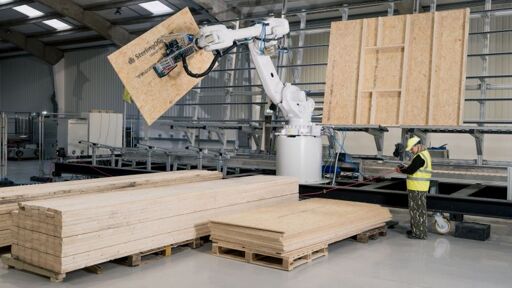
UK technology company Automated Architecture, or AUAR (pronounced “our”) believes it has a solution. It makes portable micro-factories that can produce the wooden framing of a house — the walls, floors and roofs. Co-founder Mollie Claypool says the micro-factories will be able to produce the panels quicker, cheaper and more precisely than a timber framing crew, freeing up carpenters to focus on the construction of the building.
Despite the focus on automation, Claypool insists she is not trying to put anyone out of work. “Automation isn’t replacing jobs. Automation is filling the gap,” she told CNN.
You must log in or # to comment.
Innovations like this entirely miss why housing is expensive and out of reach for most people. We have more housing than people already.
This doesn’t address corps like Blackrock buying up housing in bulk in order to dictate market prices. It doesnt address the wealthy buying up property as a way to avoid taxation on wealth even when they have little intention of using it. It doesn’t address legislation that prohibits high density housing or mixed use real estate. It doesn’t address plummeting buying power because wages have plateaued for decades while inflation keeps rocketing up.
So until that and more is addressed there is no construction innovation that will make the housing market more affordable.
Either the construction costs more by adding the bots to the crew, or they cost the same with the owners of said bots pocketing the difference of reduced labor. The chances of costs actually going down by cost savings being passed through are roughly zero.
Can these robots throw billionaires controlling housing prices into the ocean? We have enough its just all owned by evil people
Wooden multifamily housing?
I live in an area where a lot of 3D-printed houses are going up. They tout the low cost of construction but guess what? All those savings go directly into the pockets of the builders. They still charge market prices for the houses. Because why wouldn’t they?
Pretty sure constructing something to live in isn’t the expensive part, it’s land you are allowed to live on that is.
Depends on where you build it but yes, most of the value is typically in the land itself.


